
Better Health, Brighter Future

Service Transformation
ADHD is a common, lifelong neurodevelopmental condition. People with ADHD often experience co-occurring mental and physical health needs. Early identification and timely intervention are essential to improving outcomes. However, waiting lists for diagnosis, clinical management and ongoing monitoring are often lengthy, reflecting scarce resources, limited capacity in specialist services, and variable awareness and training across both primary and secondary care.
As a result, many people with ADHD experience significant barriers to accessing the care they need. This module explores innovative practice to support these patients through transformation of ADHD services.
| Mainstreaming adult ADHD into Primary care in the UK Guidance, practice and best practice recommendations | https://pubmed.ncbi.nlm.nih.gov/36221085/ | ||
| ADHD Assessment Quality Assurance Standard for Children and Teenagers (CAAQAS) CAAQAS aims to improve the quality and reliability of ADHD assessments for children and teenagers, ensuring accurate diagnoses and effective interventions | https://pubmed.ncbi.nlm.nih.gov/39737064/ | ||
| The Adult ADHD assessment quality assurance standard (AQAS) AQAS aims to improve the quality and consistency of ADHD assessments for adults, ensuring accurate diagnoses and effective treatment | https://pubmed.ncbi.nlm.nih.gov/39156609/ | ||
 | ADHD National Policy & Guidance Summary of ADHD Taskforce reports 1 & 2 extracting the key recommendations relevant to ADHD pathways & services |  | |
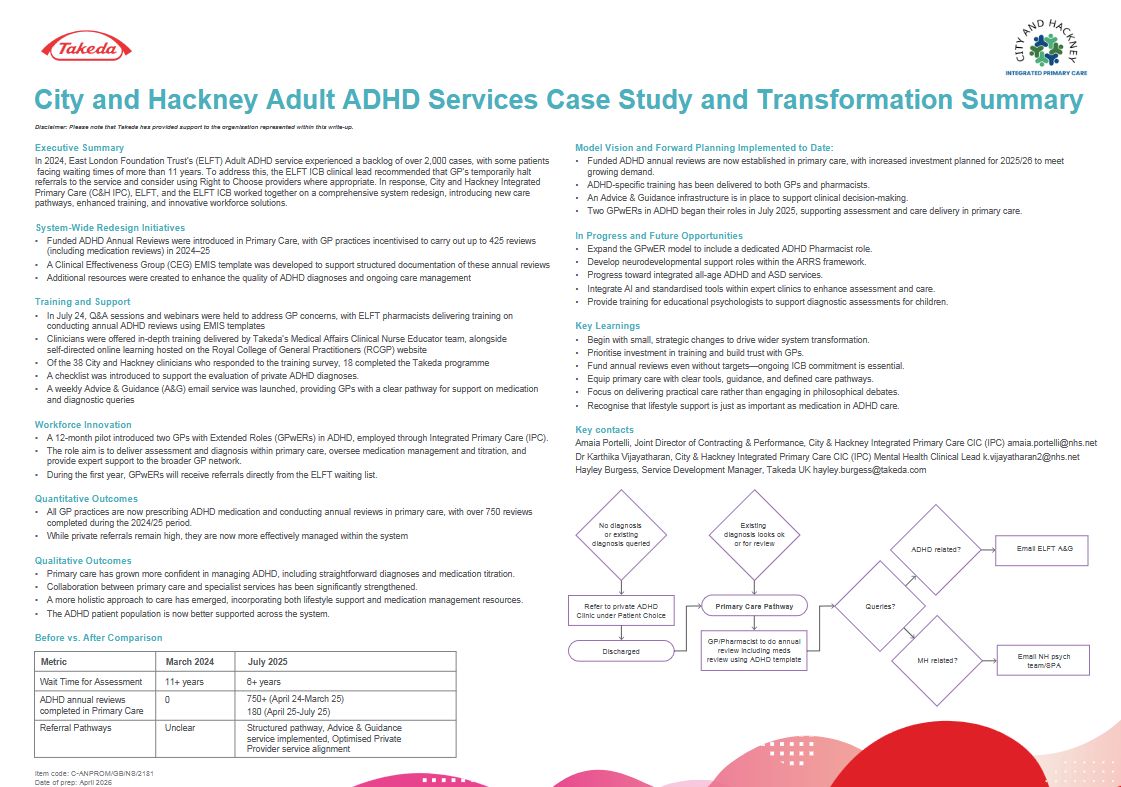 | ADHD Service Adults (18+) - GP Website City & Hackney Primary Care Adults ADHD Pathway |  | |
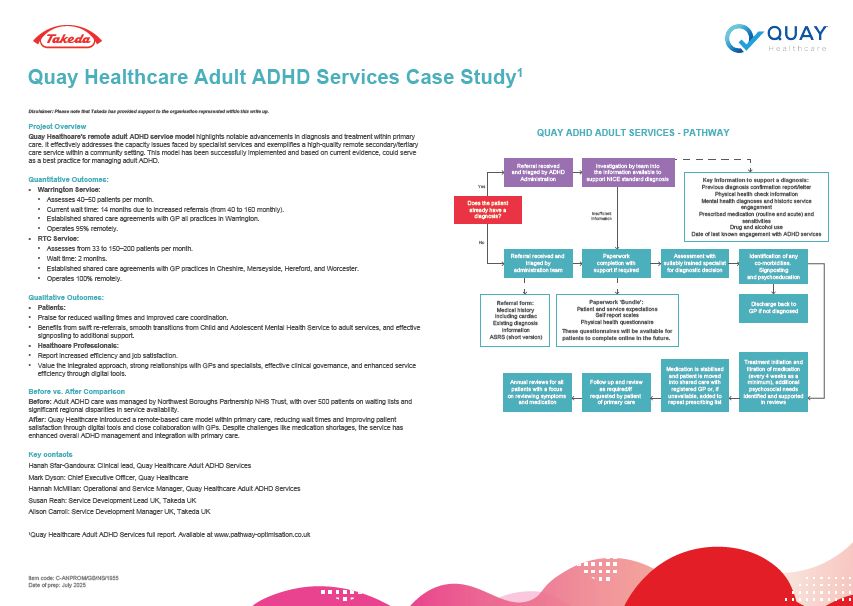 | Quay Healthcare Adult ADHD Services - diagnosis & treatment within Primary Care Quay Healthcare’s remote adult ADHD service improves diagnosis and treatment within primary care while easing capacity pressures on specialist services. Successfully implemented, it represents a high-quality community-based secondary/tertiary care model that could serve as best practice for adult ADHD management | | |
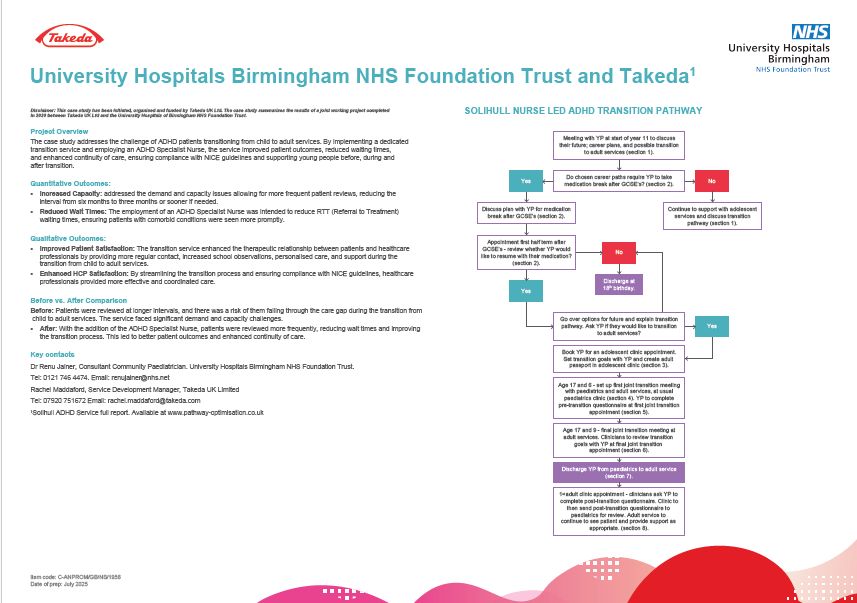 | Solihull Nurse-led Transition Pathway Nurse led Transition Pathway | | |
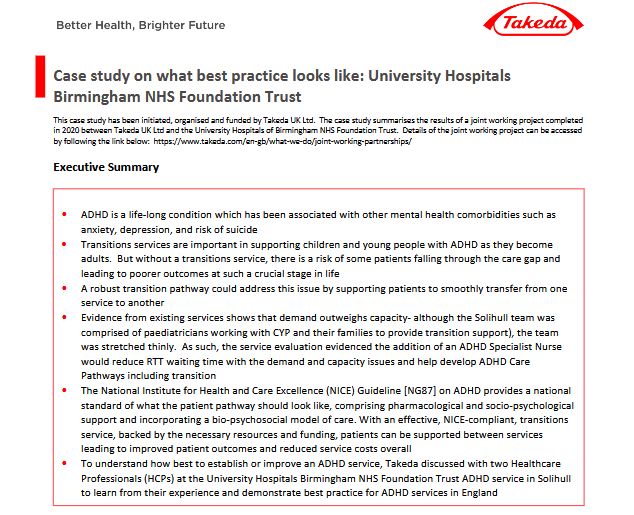 | Solihull Nurse-led Transition Pathway Case study | | |
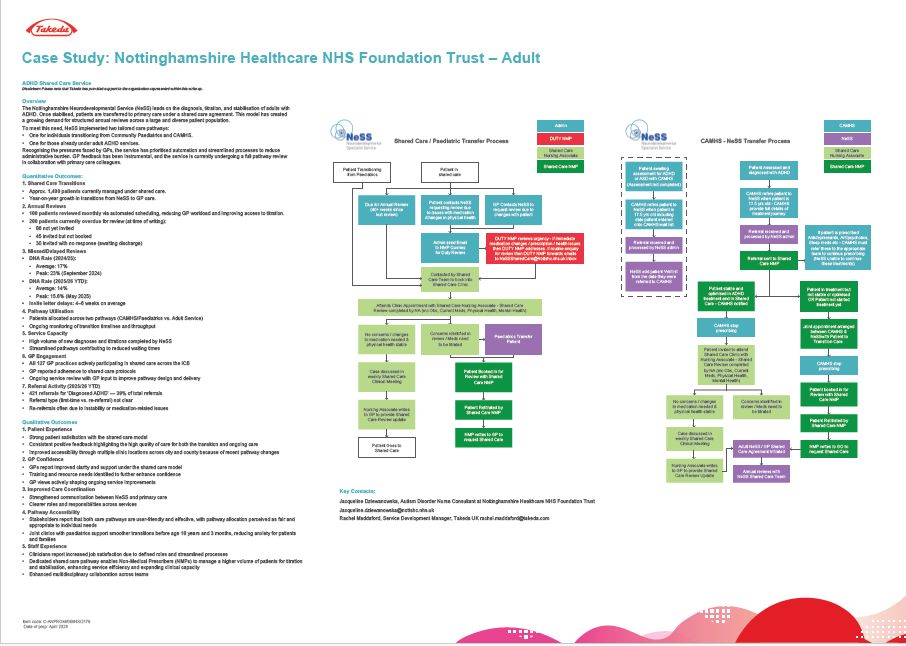 | Nottinghamshire Service Development Team Events & Pathway Toolkit Case study | | |
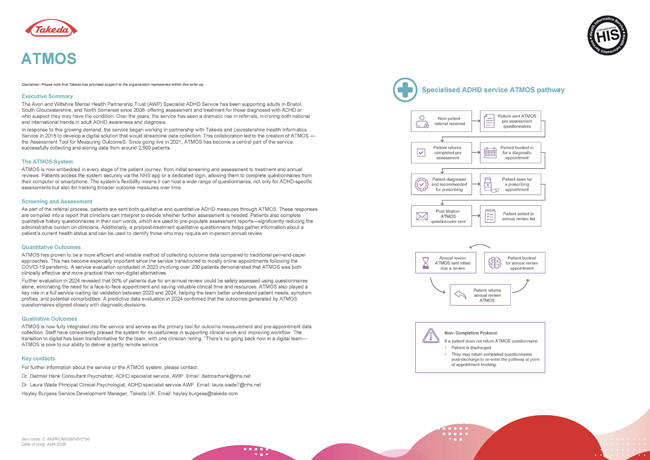 | ATMOS Service Development Team Events & Pathway Toolkit | | |
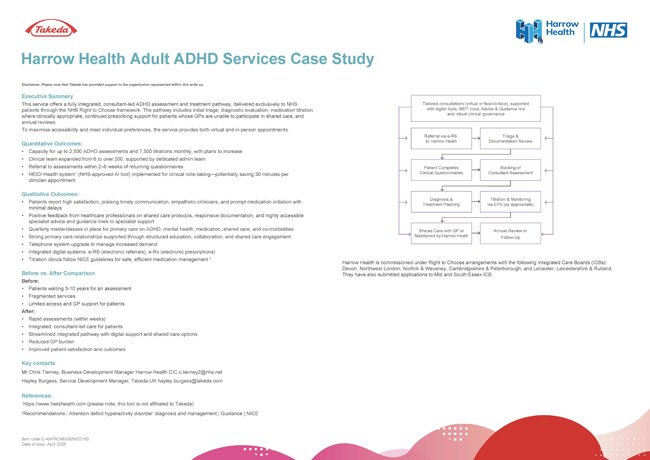 | Harrow Health Service Development Team Events & Pathway Toolkit | | |
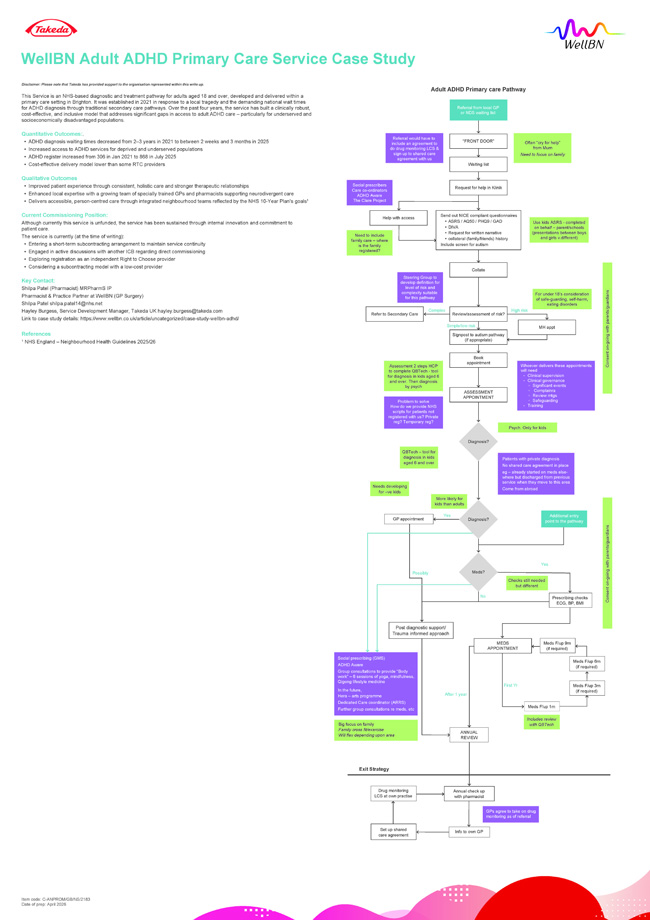 | WellBN Service Development Team Events & Pathway Toolkit - WellBN Adult ADHD Primary Care Service | |
| Introduction and overview of General Practitioner with Extended Role (GPwER) in ADHD care Royal College of General Practitioners (RCGP) GPwER framework for GPs looking for extended roles within ADHD | https://www.rcgp.org.uk/your-career/gp-extended-roles/ADHD-framework-introduction | ||